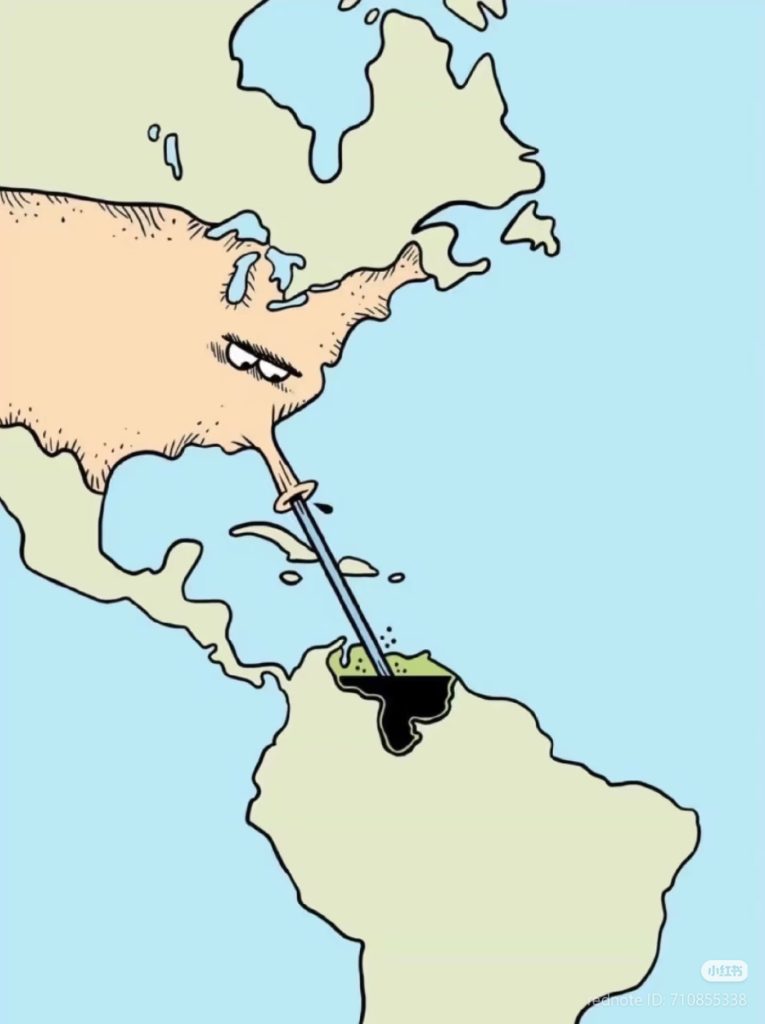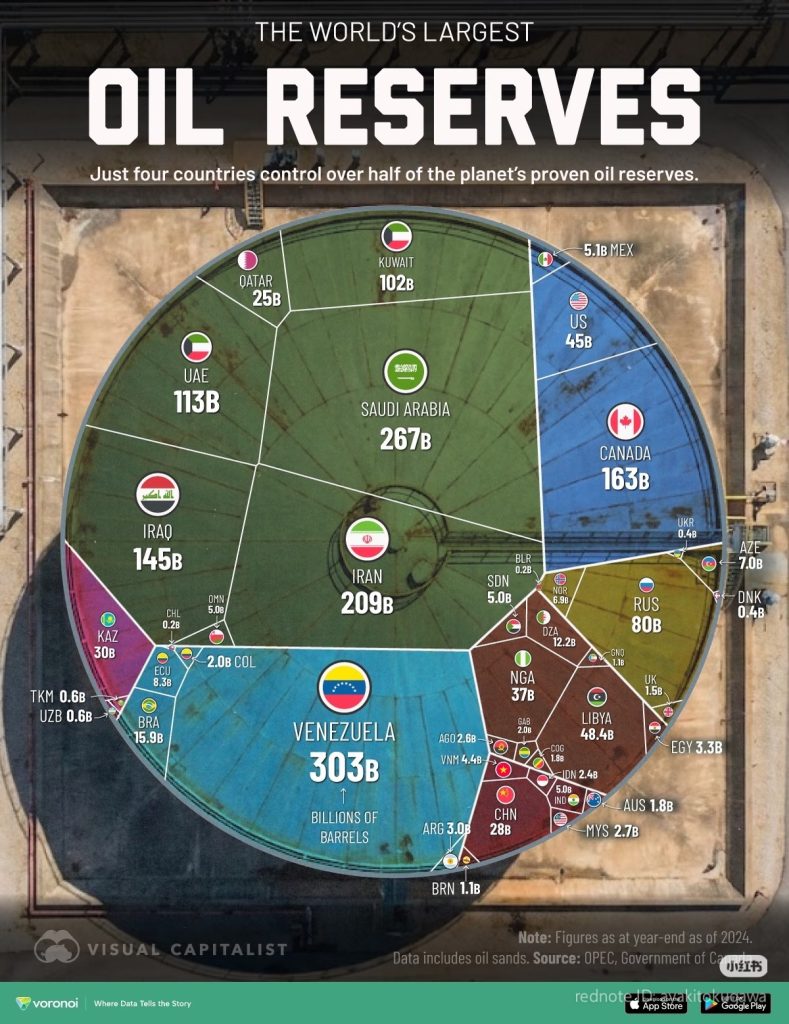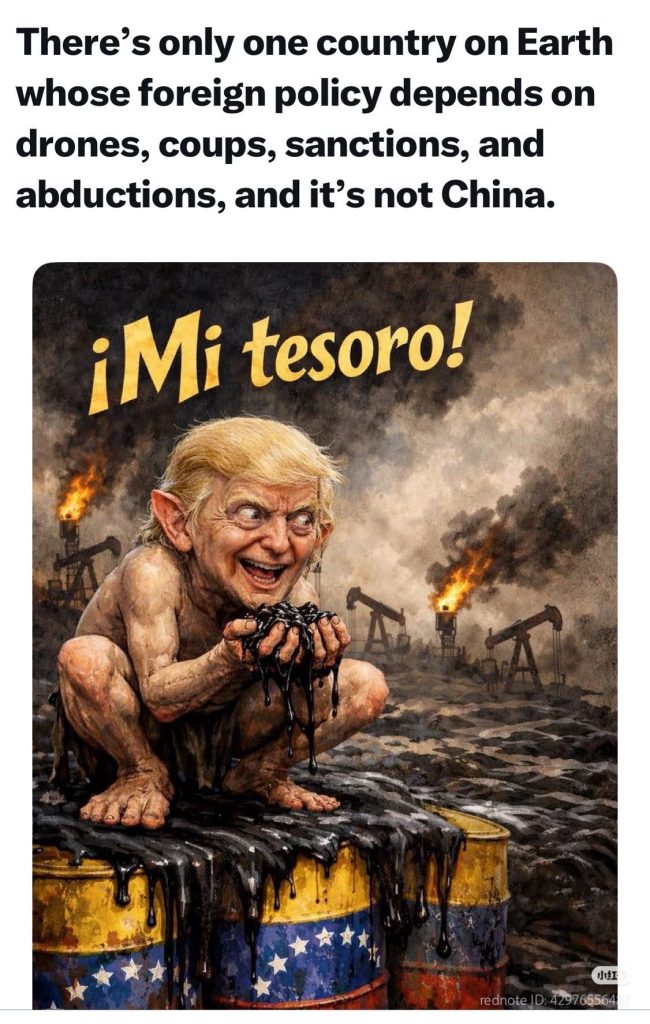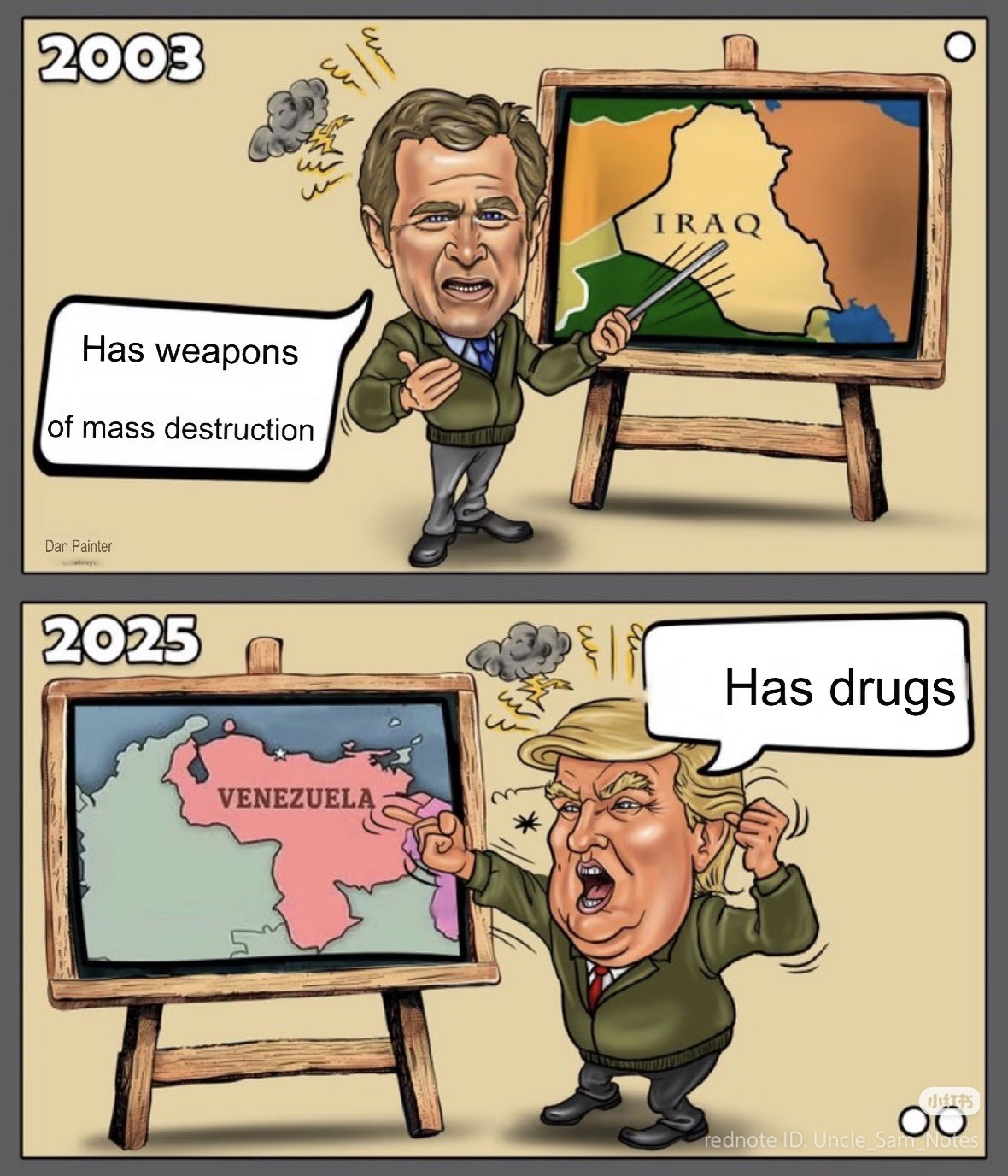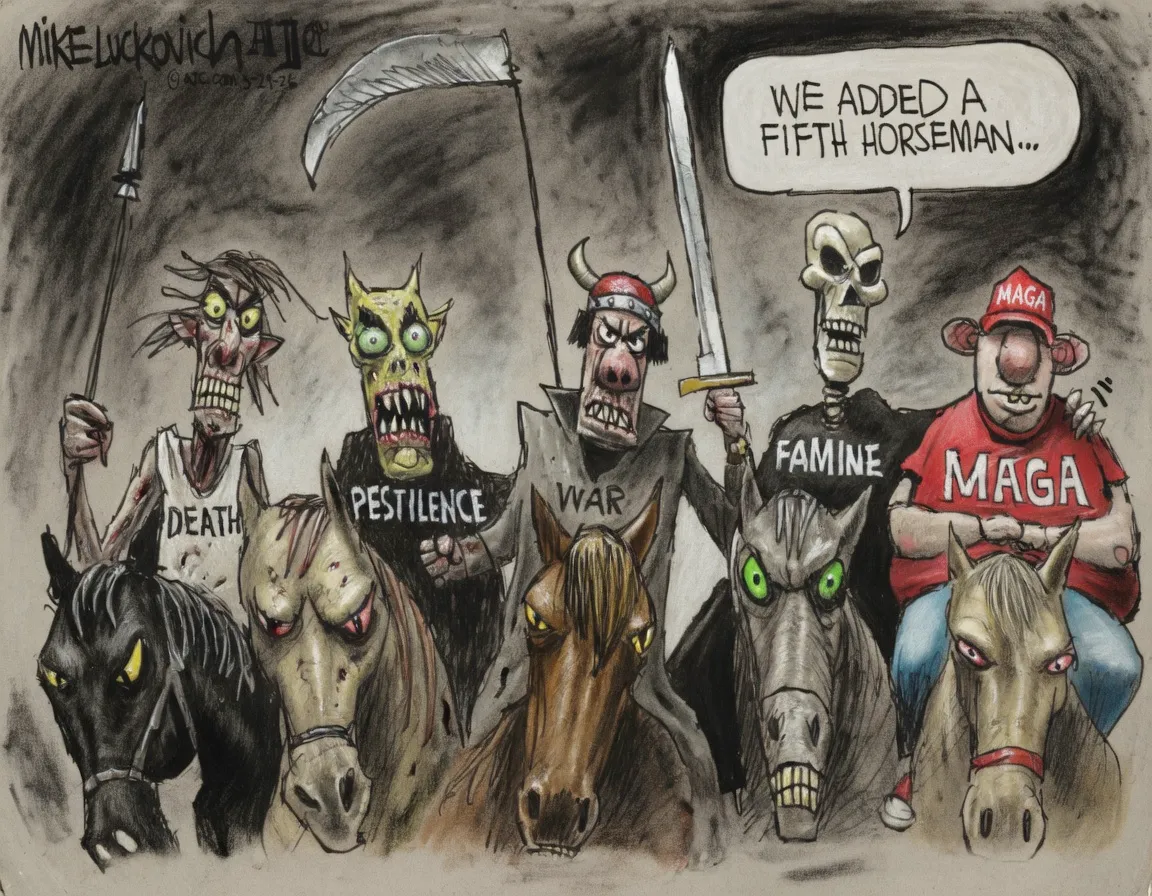
Epstein’s friends: The US attacks Venezuela and kidnaps its president.

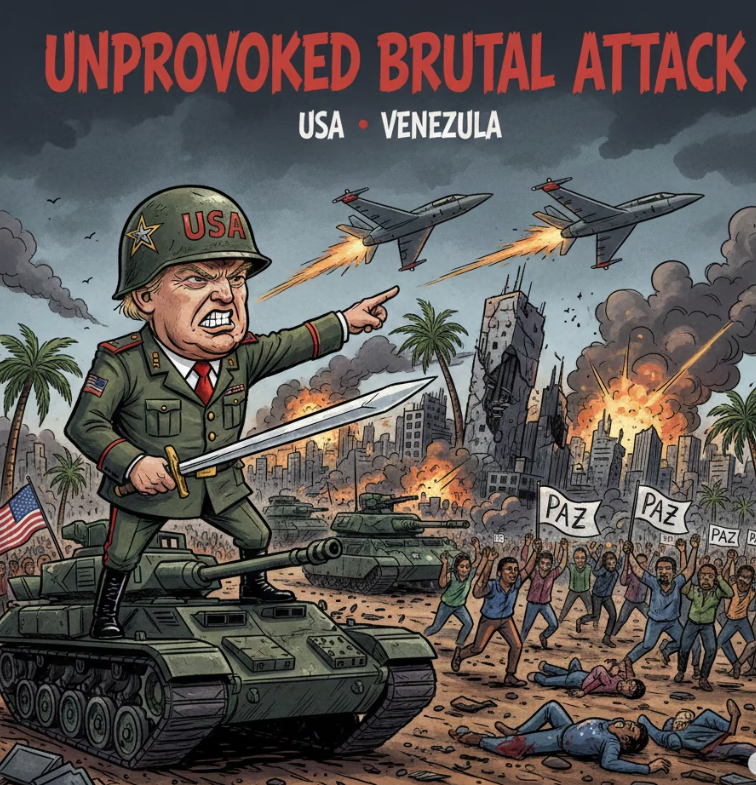
The baseless military action by the United States against Venezuela is a blatant violation of international law and sovereignty. This inevitably brings to mind a series of interventionist actions, such as NATO’s bombing of Yugoslavia, the invasion of Iraq, and interventions in Libya and Syria. The U.S. remains silent on the issue of genocide in Gaza while wreaking havoc on countries that do not submit to its demands. Such double standards are shocking. From “weapons of mass destruction” to “terrorism,” the United States frequently wages war under false pretexts, bringing endless suffering to the world. These lies and deceit have deepened suspicions about the intentions of the United States and its allies. Against this backdrop, it is not difficult to understand why countries like North Korea persist in developing nuclear weapons to safeguard their own security. They have witnessed the tragic fate of those nations that have abandoned their self-defense capabilities. The international community must be vigilant against such hegemonic actions and strive to build a more just and peaceful world.

Monroe Doctrine
The Monroe Doctrine, proposed by U.S. President James Monroe in 1823, is a foreign policy with the core principle that "America is for Americans." It asserts that European powers must not colonize the Americas or interfere in their affairs, while the United States would not intervene in European disputes. Initially intended to prevent European interference in Latin American independence movements, the policy later evolved into a tool for U.S. expansion in the region. During his presidency, Trump revived the Monroe Doctrine as a basis for curbing Chinese and Russian influence in Latin America, and the 2026 arrest of Venezuelan President Maduro was seen as a practical implementation of this new Monroe Doctrine. Historically, the U.S. had launched multiple military interventions in Latin America based on this doctrine, but in 2013, the U.S. government officially declared the policy's era to be over.

US Wars since 2020

updated
  • 2020: Response to attack on the U.S. embassy in Baghdad. The U.S. embassy in Baghdad came under siege on December 31, 2019, following U.S. retaliation for an attack by the pro-Iranian Kata’ib Hezbollah in which four service members were wounded and one civilian contractor was killed. In response, Marines and aircraft were immediately dispatched from Kuwait for defense of the embassy and overwatch. On January 2, 2020, the U.S. launched an airstrike on a convoy, killing Iranian Quds Force Major-General Qasem Soleimani and Iraqi militia leader Abu Mahdi al-Muhandis. An additional 4,000 U.S. troops were mobilized to the region, including some 750 from the 82nd Airborne Division. In an annual report released by the Pentagon on May 6, 2020, it cited that approximately 132 civilians have been killed in 2019 as part of US military operations in Iraq, Afghanistan, Somalia and Syria. The Department of Defense (DoD) added that no civilian casualties were reported under the US military operations in Libya and Yemen civil wars respectively.
  • 2021: February 2021 United States airstrike in Syria: On February 25, 2021, the United States military carried out an airstrike on a site believed to have been occupied by Iranian-backed Iraqi militias operating from across the border in eastern Syria in response to recent attacks against US and coalition forces in Iraq.
  • 2021: June 27, 2021, the U.S. military conducted airstrikes on Iranian-backed militias on both sides of the Iraq–Syria border in response to drone attacks on U.S. forces and facilities in the region.
  • 2021: American military intervention in Somalia (2007–present): July 20, 2021, U.S. military airstrikes were conducted on al-Shabab militants in Somalia, the first of its kind since US troops withdrew and President Joe Biden took office in January 2021.On July 22, 2021, further airstrikes were conducted by the U.S. Air Force against al-Shabab militants.
  • 2021: 2021 Kabul airlift: as part of an ongoing, multi-national effort by NATO partner countries to extract citizens and Afghan partners from the country following the 2021 fall of Kabul to the Taliban. The U.S. deployed 6,000 troops to seize control of Hamid Karzai International Airport to serve as a base of operations for the evacuation effort. The DOD confirmed on August 16 that General Kenneth F. McKenzie Jr., Commander, United States Central Command, had met Taliban leaders in Qatar to secure an agreement. The Taliban reportedly agreed to allow American evacuation flights at Kabul Airport to proceed without hindrance. International airlifts of evacuees had resumed by August 17 following a temporary halt to clear the runway of civilians as the DOD confirmed the airport was open for all military flights and limited commercial flights.[53] Pentagon officials added that evacuation efforts were expected to speed up and were scheduled to continue until August 31.[54] On the evening of August 22, Lloyd Austin, United States Secretary of Defense, ordered the activation of the American Civil Reserve Air Fleet to aid in the evacuations, only the third time in history that the fleet had been activated.[55] On August 26, 2021, two suicide attacks occurred outside the gates of the Kabul airport, killing at least 170 people including 13 U.S. military personnel (11 Marines, one soldier, and one Navy corpsman), along with over 150 wounded. On August 27, 2021, U.S. military forces conducted a drone strike in Nangarhar Province, Afghanistan on a presumed “planner” for the ISIS-K militant organization in response to the Kabul airport attack that occurred on August 26, 2021. On September 6, 2021, the United States evacuated four American citizens (specifically, an Amarillo, Texas woman and her three children) from Afghanistan via an overland route, marking the first overland evacuation facilitated by the US Department of State since the military withdrawal. The Taliban was aware of the evacuation and did not make any effort to stop it.[59][60] On September 17, 2021, the U.S. CENTCOM commander, General Frank MacKenzie, announced that an investigation by the U.S. military of the aforementioned drone strike found that it killed 10 civilians (including 7 children and a U.S. aid worker), and that the vehicle targeted was likely not a threat associated with ISIS-K. In December 2021, in response to the errant August strike, the Pentagon stated that no U.S. military personnel involved would be disciplined. As of November 2021, the U.S. State Department believes as many as 14,000 U.S. legal permanent residents remain in Afghanistan.
  • 2021: On October 22, 2021, a U.S. airstrike in northwestern Syria killed senior al-Qaeda leader Abdul Hamid al-Matar as part of ongoing anti-terrorism operations in the region.
  • 2022: On July 31, 2022 al-Qaeda leader Ayman al-Zawahiri was killed in Afghanistan in an American drone strike
  • 2023: Operation Prosperity Guardian: On 18 December 2023 United States Secretary of Defense Lloyd Austin announced the formation of an international maritime security force under “Operation Prosperity Guardian,” which aims to counter threats by Houthi forces against international maritime commerce following weeks of attacks against commercial vessels.
  • 2024: Operation Poseiden Archer: Between 12 January 2024 and 6 May 2025 the United States and the United Kingdom, with support from Australia, Bahrain, Canada, Denmark, the Netherlands, and New Zealand, launched a series of cruise missile and airstrikes against the Houthi movement in Yemen in response to Houthi attacks on ships in the Red Sea. The Houthis had previously declared that their attacks were in support of Palestinians during the Gaza war; Houthi attacks on shipping were condemned by the United Nations Security Council the day before the initial strike.
  • 2025: Operation Rough Rider: In March 2025, the United States launched a large campaign of air and naval strikes against Houthi targets in Yemen. Codenamed Operation Rough Rider, it has been the largest U.S. military operation in the Middle East of President Donald Trump’s second term. The strikes began on March 15, targeting radar systems, air defenses, and ballistic and drone launch sites used by the Houthis to attack commercial ships and naval vessels in the Red Sea and Gulf of Aden.
  • 2025: Operation Midnight Hammer: On June 22, 2025, the United States Air Force and Navy attacked three nuclear facilities in Iran as part of the Iran–Israel war, under the code name Operation Midnight Hammer. Seven B-2 strategic bombers striked multiple Iranian nuclear facilities. This was the only US offensive action during the Iran-Israel War.
  • 2025: Operation Southern Spear: A United States military and surveillance campaign aimed at “detecting, disrupting, and degrading transnational criminal and illicit maritime networks”.
  • 2025: Operation Hawkeye Strike: A retaliatory military action by the United States against the Islamic State, following the December 2025 Palmyra attack.
  • 2026: Operation Absolute Resolve: On 3 January 2026, the United States launched airstrikes on multiple locations across northern Venezuela, including the capital city of Caracas. President Nicolás Maduro and his wife were captured by U.S. forces and removed from the country.