Israel greift in Vorort der libanesischen Hauptstadt Beirut an

Source: TAGEBLATT

Erneut greift Israels Militär in einem Vorort der libanesischen Hauptstadt Beirut an. Auch im Gazastreifen geht die Armee weiter vor. Dort löst nach UN-Angaben ein Fluchtaufruf in Rafah Angst aus.

Die israelische Luftwaffe hat zum zweiten Mal seit Inkrafttreten der Waffenruhe mit der Hisbollah in einem Vorort der libanesischen Hauptstadt Beirut angegriffen. Ziel der nächtlichen Attacke sei ein Terrorist der proiranischen Miliz gewesen, teilte die Armee mit. Unbestätigten arabischen Berichten zufolge wurde ein Wohnhaus getroffen. Demnach kamen dabei mindestens drei Menschen ums Leben. Unterdessen geht Israels Militär im Gazastreifen weiter gegen die mit der Hisbollah-Miliz verbündete Hamas vor.

Es war der zweite Luftangriff in den als Dahija bekannten Vororten von Beirut seit Inkrafttreten der Waffenruhe zwischen Israel und der Hisbollah im November. Das Gebiet ist eine Hochburg der proiranischen Miliz. Der von der Armee zum Ziel des erneuten Angriffs erklärte Hisbollah-Angehörige habe Mitglieder der islamistischen Hamas bei der Planung eines unmittelbar bevorstehenden Anschlags gegen israelische Zivilisten unterstützt. Der Mann habe eine direkte Bedrohung dargestellt und sei „eliminiert“ worden, hieß es.

Erst vor wenigen Tagen hatte Israels Luftwaffe in Dahija eigenen Angaben zufolge ein Drohnenlager der Miliz attackiert. Kurz zuvor hatte die israelische Armee Raketenbeschuss aus dem Libanon gemeldet. Der israelische Regierungschef Benjamin Netanjahu erklärte daraufhin laut einer Mitteilung seines Büros, man werde die Waffenruhe energisch durchsetzen. „Wir werden überall im Libanon angreifen, wenn der Staat Israel bedroht ist“, hieß es.

Die vom Iran unterstützte Hisbollah hatte Israel seit Beginn des Kriegs im Gazastreifen im Oktober 2023 mehr als ein Jahr lang mit Raketen beschossen. Sie wollte damit nach eigenen Angaben die Hamas im Gazastreifen unterstützen. Israel antwortete mit Luftangriffen und einer Bodenoffensive.

UN-Hilfswerk: Panik nach Fluchtaufruf in Rafah

Derweil weitet das israelische Militär seine Bodenangriffe in Rafah im Süden des umkämpften Gazastreifens aus. Wegen bevorstehender „intensiver Einsätze“ wurden die Bewohner des Großteils der Stadt am Montag zur Flucht aufgerufen. Dies löste nach Angaben des UN-Palästinenserhilfswerks Panik aus. „Die Menschen werden wie Flipperkugeln behandelt mit ständigen militärischen Befehlen“, beklagte UNRWA-Chef Philippe Lazzarini auf X.

Es werde mit dem Schicksal und Leben der Menschen gespielt, schrieb Lazzarini. „Dies führt zu Panik, Angst und Unsicherheit am ersten Tag des Zuckerfestes, einer Zeit, in der man eigentlich mit seiner Familie und seinen Lieben zusammen ist.“ Der Aufruf der israelischen Armee zur Flucht erfolgte während des Eid al-Fitr, einem muslimischen Feiertag, der das Ende des Fastenmonats Ramadan markiert. Mehr als 140.000 Menschen waren laut Lazzarini von dem Evakuierungsbefehl des israelischen Militärs betroffen.

Die Bewohner im Raum Rafah sowie benachbarter Orte sollten sich umgehend nach Al-Mawasi begeben, hieß es in dem in arabischer Sprache veröffentlichten Aufruf der Armee. Die „intensiven Einsätze“ in den betroffenen Gegenden würden wieder aufgenommen, um gegen Terrororganisationen vorzugehen.

Das im Südwesten gelegene Gebiet um Al-Mawasi war während des Kriegs als humanitäre Zone ausgewiesen worden. In der Vergangenheit hatte das israelische Militär aber auch dort mehrfach angegriffen. Ziel waren Armeeangaben zufolge dabei etwa Einrichtungen der islamistischen Hamas.

„Wohin sollen die Menschen ziehen?“, beklagte der UNRWA-Chef. Das Küstengebiet sei „wie ein Käfig abgeriegelt“ und werde „von allen Seiten bombardiert“. Nach Inkrafttreten eines Waffenruhe-Abkommens am 19. Januar waren viele Vertriebene in Gaza wieder in ihre Heimatorte zurückgekehrt.

Mitte März nahm Israel die massiven Angriffe in dem Küstengebiet wieder auf, nachdem sich beide Seiten nicht auf eine Verlängerung der Feuerpause einigen konnten. Israels Armee begann seitdem auch Bodeneinsätze gegen die Hamas in Rafah. Ziel der neuen Bodenoffensive ist laut der israelischen Armee auch die Errichtung einer Pufferzone entlang der Grenzen des Küstengebiets.

Gespräche über neue Waffenruhe

Israel und die Hamas verhandeln bei indirekten Gesprächen derzeit über eine neue Waffenruhe. Strittig ist aber noch, wie viele israelische Geiseln dabei freikommen sollen. Israels Ministerpräsident Netanjahu hatte am Sonntag eine weitere Verstärkung der Angriffe auf die Islamisten in Gaza angekündigt.

Nur die Kombination aus militärischem und diplomatischem Druck könne die Geiseln zurückbringen. Angehörige der Geiseln hatten immer wieder gewarnt, der Neubeginn des Kriegs gefährde das Leben ihrer Angehörigen. Nach israelischen Informationen werden noch 24 Geiseln aus Israel im Gazastreifen festgehalten, hinzu kommen die sterblichen Überreste von 35 Entführten.

Auslöser des Kriegs war der Überfall der Hamas und anderer extremistischer Gruppen im Süden Israels am 7. Oktober 2023, bei dem rund 1.200 Menschen getötet und mehr als 250 weitere als Geiseln nach Gaza verschleppt wurden. Im Zuge des Kriegs wurden laut den von der Hamas kontrollierten Gesundheitsbehörden im Gazastreifen mehr als 50.000 Menschen getötet. Bei einem Drittel davon handelt es sich demnach um Kinder und Jugendliche. Die Angaben lassen sich nicht unabhängig überprüfen. Internationale Organisationen wie die UN halten sie jedoch für weitgehend glaubwürdig.

UN says 100 children killed or injured in Gaza every day since war resumed

Palestinian and UN bodies mark Palestine Children’s Day with ‘harrowing’ accounts of the toll Israel’s assault on Gaza has taken on children.

https://www.aljazeera.com

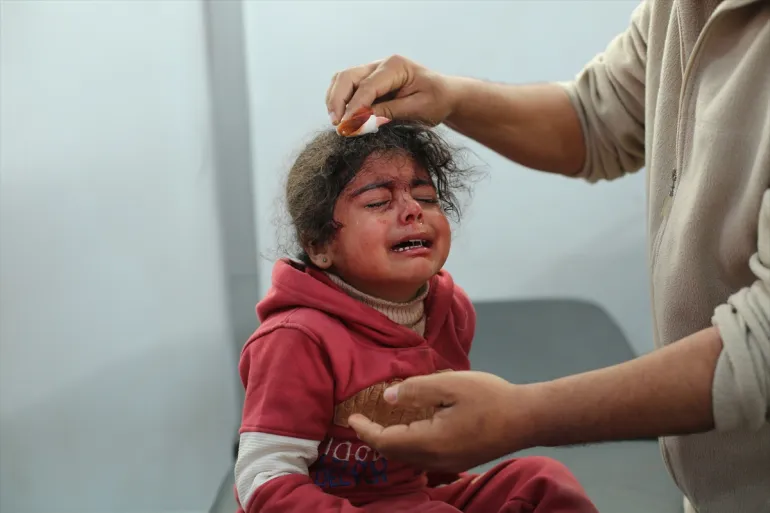
A Palestinian child injured in an Israeli attack cries inside Al-Awda Hospital in Gaza City [File: Hassan Jedi/Anadolu]

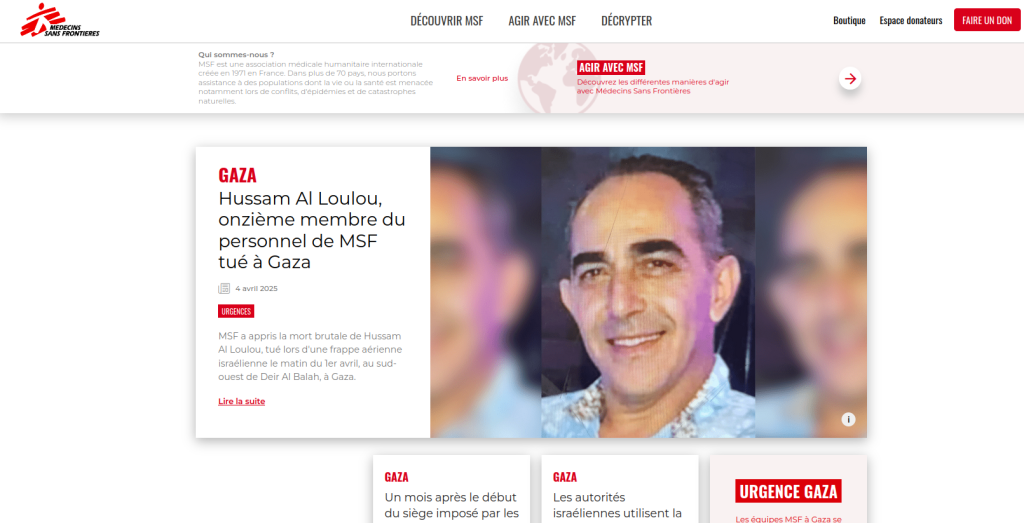
Hussam Al Loulou, onzième membre du personnel de Médecins Sans Frontères tué à Gaza

Médecins Sans Frontières (MSF) a appris la mort brutale de Hussam Al Loulou, tué lors d’une frappe aérienne israélienne le matin du 1er avril, au sud-ouest de Deir Al Balah, à Gaza. Sa femme et sa fille de 28 ans qui se trouvaient avec lui ont également été tuées dans cette attaque.

Frieden : «Unsere Pflicht ist es, den Gefahren für den Frieden zu begegnen»

Source: Lessentiel par Pascal Piatkowski

Der Premierminister erinnerte in einer Rede am Mittwoch in Straßburg an die unverbrüchliche Verbundenheit Luxemburgs mit dem Europarat.

Vor den versammelten Europaabgeordneten am Mittwoch in Straßburg erinnerte Luc Frieden (CSV) an die «unerschütterliche Verbundenheit» Luxemburgs mit dem Europarat, der historisch gesehen die «erste gemeinsame demokratische Institution unseres Kontinents» sei. Der Premierminister betonte, dass unser Land «dem Schutz und der Förderung der Menschenrechte sowohl auf internationaler Ebene als auch im Großherzogtum größte Bedeutung beimisst».

Luc Frieden hielt ein leidenschaftliches Plädoyer für Europa, das «vor allem eine Idee und eine Ambition» sei, und erinnerte daran, dass «es kein Europa ohne Demokratie, ohne Achtung der Menschenrechte und ohne Rechtsstaatlichkeit gibt». Der Premierminister sprach zudem ausführlich über den Angriffskrieg Russlands gegen die Ukraine, «einen Krieg gegen unsere Werte, einen Krieg gegen das Völkerrecht und gegen den Multilateralismus».

«Unsere Pflicht ist es, den Gefahren entgegenzutreten, die den Frieden bedrohen», mahnte der Premierminister und betonte, dass der Europarat auf dem Gipfel in Reykjavík eine Einigung über die Einrichtung eines Registers für Schäden erzielt habe, die durch die russische Aggression gegen die Ukraine verursacht wurden. «Es liegt in unserem gemeinsamen Interesse, Synergien mit anderen internationalen Organisationen, insbesondere den Vereinten Nationen, der OSZE und der Europäischen Union, zu fördern, um die Ukraine auf allen Ebenen zu unterstützen», unterstrich der Regierungschef.

«Nationale – oder gar nationalistische – Lösungen sind zum Scheitern verurteilt»

Die Unterstützung der Ukraine «wird eine zentrale Priorität der luxemburgischen Präsidentschaft des Ministerkomitees bleiben, aufgrund der Prinzipien, die wir verteidigen und die die Ukraine für uns alle verteidigt», fügte Luc Frieden hinzu. Der Premierminister begrüßte, dass der Europarat die Demokratie wiederbeleben wolle, und erinnerte daran, dass die Erosion des Rechtsstaats in erster Linie «die verletzlichsten Menschen und Minderheiten» treffe.

Luc Frieden erinnerte zudem an die Bedeutung des Europäischen Gerichtshofs für Menschenrechte, der «eine entscheidende Rolle beim Schutz der Menschenrechte auf dem gesamten europäischen Kontinent spielt», und kündigte an, dass Luxemburg weiterhin die finanziellen Anstrengungen unterstützen werde, damit das Gericht über ein Budget verfügt, das «seiner Aufgabe gerecht wird».

Der Premierminister sprach schließlich die zahlreichen Herausforderungen an, mit denen die Europäer konfrontiert sind – Klimawandel, Migrationsbewegungen, Künstliche Intelligenz … – und warnte davor, dass nationale – oder gar nationalistische – Lösungen «zum Scheitern verurteilt sind».

US Wars since 2020

updated
  • 2020: Response to attack on the U.S. embassy in Baghdad. The U.S. embassy in Baghdad came under siege on December 31, 2019, following U.S. retaliation for an attack by the pro-Iranian Kata’ib Hezbollah in which four service members were wounded and one civilian contractor was killed. In response, Marines and aircraft were immediately dispatched from Kuwait for defense of the embassy and overwatch. On January 2, 2020, the U.S. launched an airstrike on a convoy, killing Iranian Quds Force Major-General Qasem Soleimani and Iraqi militia leader Abu Mahdi al-Muhandis. An additional 4,000 U.S. troops were mobilized to the region, including some 750 from the 82nd Airborne Division. In an annual report released by the Pentagon on May 6, 2020, it cited that approximately 132 civilians have been killed in 2019 as part of US military operations in Iraq, Afghanistan, Somalia and Syria. The Department of Defense (DoD) added that no civilian casualties were reported under the US military operations in Libya and Yemen civil wars respectively.
  • 2021: February 2021 United States airstrike in Syria: On February 25, 2021, the United States military carried out an airstrike on a site believed to have been occupied by Iranian-backed Iraqi militias operating from across the border in eastern Syria in response to recent attacks against US and coalition forces in Iraq.
  • 2021: June 27, 2021, the U.S. military conducted airstrikes on Iranian-backed militias on both sides of the Iraq–Syria border in response to drone attacks on U.S. forces and facilities in the region.
  • 2021: American military intervention in Somalia (2007–present): July 20, 2021, U.S. military airstrikes were conducted on al-Shabab militants in Somalia, the first of its kind since US troops withdrew and President Joe Biden took office in January 2021.On July 22, 2021, further airstrikes were conducted by the U.S. Air Force against al-Shabab militants.
  • 2021: 2021 Kabul airlift: as part of an ongoing, multi-national effort by NATO partner countries to extract citizens and Afghan partners from the country following the 2021 fall of Kabul to the Taliban. The U.S. deployed 6,000 troops to seize control of Hamid Karzai International Airport to serve as a base of operations for the evacuation effort. The DOD confirmed on August 16 that General Kenneth F. McKenzie Jr., Commander, United States Central Command, had met Taliban leaders in Qatar to secure an agreement. The Taliban reportedly agreed to allow American evacuation flights at Kabul Airport to proceed without hindrance. International airlifts of evacuees had resumed by August 17 following a temporary halt to clear the runway of civilians as the DOD confirmed the airport was open for all military flights and limited commercial flights.[53] Pentagon officials added that evacuation efforts were expected to speed up and were scheduled to continue until August 31.[54] On the evening of August 22, Lloyd Austin, United States Secretary of Defense, ordered the activation of the American Civil Reserve Air Fleet to aid in the evacuations, only the third time in history that the fleet had been activated.[55] On August 26, 2021, two suicide attacks occurred outside the gates of the Kabul airport, killing at least 170 people including 13 U.S. military personnel (11 Marines, one soldier, and one Navy corpsman), along with over 150 wounded. On August 27, 2021, U.S. military forces conducted a drone strike in Nangarhar Province, Afghanistan on a presumed “planner” for the ISIS-K militant organization in response to the Kabul airport attack that occurred on August 26, 2021. On September 6, 2021, the United States evacuated four American citizens (specifically, an Amarillo, Texas woman and her three children) from Afghanistan via an overland route, marking the first overland evacuation facilitated by the US Department of State since the military withdrawal. The Taliban was aware of the evacuation and did not make any effort to stop it.[59][60] On September 17, 2021, the U.S. CENTCOM commander, General Frank MacKenzie, announced that an investigation by the U.S. military of the aforementioned drone strike found that it killed 10 civilians (including 7 children and a U.S. aid worker), and that the vehicle targeted was likely not a threat associated with ISIS-K. In December 2021, in response to the errant August strike, the Pentagon stated that no U.S. military personnel involved would be disciplined. As of November 2021, the U.S. State Department believes as many as 14,000 U.S. legal permanent residents remain in Afghanistan.
  • 2021: On October 22, 2021, a U.S. airstrike in northwestern Syria killed senior al-Qaeda leader Abdul Hamid al-Matar as part of ongoing anti-terrorism operations in the region.
  • 2022: On July 31, 2022 al-Qaeda leader Ayman al-Zawahiri was killed in Afghanistan in an American drone strike
  • 2023: Operation Prosperity Guardian: On 18 December 2023 United States Secretary of Defense Lloyd Austin announced the formation of an international maritime security force under “Operation Prosperity Guardian,” which aims to counter threats by Houthi forces against international maritime commerce following weeks of attacks against commercial vessels.
  • 2024: Operation Poseiden Archer: Between 12 January 2024 and 6 May 2025 the United States and the United Kingdom, with support from Australia, Bahrain, Canada, Denmark, the Netherlands, and New Zealand, launched a series of cruise missile and airstrikes against the Houthi movement in Yemen in response to Houthi attacks on ships in the Red Sea. The Houthis had previously declared that their attacks were in support of Palestinians during the Gaza war; Houthi attacks on shipping were condemned by the United Nations Security Council the day before the initial strike.
  • 2025: Operation Rough Rider: In March 2025, the United States launched a large campaign of air and naval strikes against Houthi targets in Yemen. Codenamed Operation Rough Rider, it has been the largest U.S. military operation in the Middle East of President Donald Trump’s second term. The strikes began on March 15, targeting radar systems, air defenses, and ballistic and drone launch sites used by the Houthis to attack commercial ships and naval vessels in the Red Sea and Gulf of Aden.
  • 2025: Operation Midnight Hammer: On June 22, 2025, the United States Air Force and Navy attacked three nuclear facilities in Iran as part of the Iran–Israel war, under the code name Operation Midnight Hammer. Seven B-2 strategic bombers striked multiple Iranian nuclear facilities. This was the only US offensive action during the Iran-Israel War.
  • 2025: Operation Southern Spear: A United States military and surveillance campaign aimed at “detecting, disrupting, and degrading transnational criminal and illicit maritime networks”.
  • 2025: Operation Hawkeye Strike: A retaliatory military action by the United States against the Islamic State, following the December 2025 Palmyra attack.
  • 2026: Operation Absolute Resolve: On 3 January 2026, the United States launched airstrikes on multiple locations across northern Venezuela, including the capital city of Caracas. President Nicolás Maduro and his wife were captured by U.S. forces and removed from the country.

Israel’s Crime of Extermination, Acts of Genocide in Gaza

HUMAN RIGHTS WATCH

Authorities’ Widespread Deprivation of Water Threatens Survival

  • Israeli authorities have deliberately inflicted conditions of life calculated to bring about the destruction of part of the population in Gaza by intentionally depriving Palestinian civilians there of adequate access to water, most likely resulting in thousands of deaths.
  • In doing so, Israeli authorities are responsible for the crime against humanity of extermination and for acts of genocide. The pattern of conduct, coupled with statements suggesting that some Israeli officials wished to destroy Palestinians in Gaza, may amount to the crime of genocide.  
  • Governments and international organizations should take all measures to prevent genocide in Gaza, including discontinuing military assistance, reviewing bilateral agreements and diplomatic relations, and supporting the International Criminal Court and other accountability efforts. 

(Jerusalem) – Israeli authorities have intentionally deprived Palestinian civilians in Gaza of adequate access to water since October 2023, most likely resulting in thousands of deaths and thus committing the crime against humanity of extermination and acts of genocide, Human Rights Watch said in a report released today. 

In the 179-page report, “Extermination and Acts of Genocide: Israel Deliberately Depriving Palestinians in Gaza of Water,” Human Rights Watch found that Israeli authorities have intentionally deprived Palestinians in Gaza of access to safe water for drinking and sanitation needed for basic human survival. Israeli authorities and forces cut off and later restricted piped water to Gaza; rendered most of Gaza’s water and sanitation infrastructure useless by cutting electricity and restricting fuel; deliberately destroyed and damaged water and sanitation infrastructure and water repair materials; and blocked the entry of critical water supplies.

“Water is essential for human life, yet for over a year the Israeli government has deliberately denied Palestinians in Gaza the bare minimum they need to survive,” said Tirana Hassan, executive director at Human Rights Watch. “This isn’t just negligence; it is a calculated policy of deprivation that has led to the deaths of thousands from dehydration and disease that is nothing short of the crime against humanity of extermination, and an act of genocide.”

Human Rights Watch interviewed 66 Palestinians from Gaza, 4 employees of Gaza’s Coastal Municipalities Water Utility (CMWU), 31 healthcare professionals, and 15 people working with United Nations agencies and international aid organizations in Gaza. Human Rights Watch also analyzed satellite imagery, photographs, and videos captured between the beginning of the hostilities in October 2023 and September 2024, as well as data collected and estimates produced by doctors, epidemiologists, humanitarian aid organizations, and water and sanitation experts. 

Human Rights Watch concluded that Israeli authorities have intentionally created conditions of life calculated to bring about the physical destruction of Palestinians in Gaza in whole or in part. This policy, inflicted as part of a mass killing of Palestinian civilians in Gaza, means Israeli authorities have committed the crime against humanity of extermination, which is ongoing. This policy also amounts to one of the five “acts of genocide” under the Genocide Convention of 1948. Genocidal intent may also be inferred from this policy, coupled with statements suggesting some Israeli officials wished to destroy Palestinians in Gaza, and therefore the policy may amount to the crime of genocide.

Immediately after the attacks in southern Israel by Hamas-led Palestinian armed groups in Gaza on October 7, 2023, which Human Rights Watch has found amounted to war crimes and crimes against humanity, Israeli authorities cut all electricity and fuel to the Gaza Strip. On October 9, then-Defense Minister Yoav Gallant announced a “complete siege” of Gaza, stating: “There will be no electricity, no food, no water, no fuel, everything is closed.”

./.

Source: https://www.hrw.org/news/2024/12/19/israels-crime-extermination-acts-genocide-gaza


Papst Franziskus: „Krieg ist immer eine Niederlage“ – Appell für Frieden in Luxemburg

Quelle: www.vaticannews.va

Luxemburg – Bei einem Besuch in Luxemburg hat Papst Franziskus am Donnerstag zu verstärkten Friedensbemühungen aufgerufen. Vor Vertretern der Politik und Zivilgesellschaft warnte der Pontifex eindringlich vor den verheerenden Folgen von Krieg und mahnte zu Diplomatie und ehrlichen Verhandlungen. „Der Krieg ist immer eine Niederlage“, betonte der Papst und kritisierte zugleich die wachsende Rüstungsproduktion in Europa.

Franziskus lobte Luxemburg für seine historische Rolle als Brückenbauer in Europa und hob das Land als Vorbild für friedliche Koexistenz hervor. „Luxemburg kann allen zeigen, welche Vorteile der Frieden gegenüber den Schrecken des Krieges hat“, sagte er. Der Papst forderte die politischen Führer auf, sich mit Geduld und Entschlossenheit für den Frieden einzusetzen und betonte, dass eine nachhaltige Entwicklung nur durch Gerechtigkeit und Solidarität möglich sei.

Besonders hob Franziskus die Bedeutung der Aufnahme und Integration von Migranten hervor und appellierte an Luxemburg, seine Tradition der Offenheit fortzusetzen. Der Papst machte klar, dass wahre Fortschritte nur erreicht werden können, wenn die Konflikte dieser Welt durch diplomatische Bemühungen gelöst und nicht durch Gewalt verschärft werden.

Abschließend ermutigte Papst Franziskus alle Nationen, ihre Verantwortung für den Frieden ernst zu nehmen und die Wege der Gewalt hinter sich zu lassen. „Es ist dringend notwendig, dass die Verantwortlichen sich entschlossen und geduldig auf ehrliche Verhandlungen einlassen“, sagte der Papst und schloss seine Rede mit einem eindringlichen Friedensappell.

Le Luxembourg va faire l’acquisition de blindés Griffon et Jaguar

Source: Armees.com

Le Luxembourg va commander 38 Engins Blindés de Reconnaissance et de Combat (EBRC) Jaguar et 16 Véhicules Blindés Multi-Rôles (VBMR) Griffon dans le cadre du programme SCORPION. Cette initiative s’inscrit dans la volonté du Luxembourg de former un bataillon binational avec la Belgique d’ici 2030 et de renforcer son engagement envers l’OTAN.

Le Luxembourg s’apprête à investir 2,6 milliards d’euros dans un projet historique pour renforcer sa capacité militaire. Yuriko Backes, la ministre luxembourgeoise de la Défense, a confirmé cette initiative le 8 mai. L’objectif principal est de doter l’armée luxembourgeoise de 38 blindés Jaguar, 16 Griffon, 5 VBMR Légers Serval, ainsi que d’une série de véhicules complémentaires. Cette acquisition représente une avancée significative pour l’armée du Grand-Duché, qui souhaite former un bataillon binational de reconnaissance et de combat avec la Belgique d’ici 2030.

« La création du bataillon binational et l’acquisition des véhicules de combat médian techniquement à la pointe permettront à l’armée luxembourgeoise de se transformer pour être capable d’agir dans un environnement sécuritaire plus exigeant », a souligné Mme Backes. Cet investissement, s’étalant sur trente ans, garantit que le Luxembourg pourra continuer à honorer ses engagements envers l’OTAN et l’Union européenne.

L’interopérabilité du programme SCORPION

Cette initiative d’achat s’inscrit dans le cadre du programme SCORPION, qui vise à renforcer l’interopérabilité entre les forces armées françaises, belges et luxembourgeoises. Le Grand-Duché prévoit ainsi de commander trois dépanneuses blindées, 50 camions et 24 porteurs de char compatibles avec les engins du programme SCORPION. Les livraisons commenceront à partir de 2028, marquant le début d’une nouvelle ère pour l’armée luxembourgeoise.

L’acquisition ne s’arrête pas aux véhicules eux-mêmes. Le Luxembourg envisage également d’acheter divers sous-systèmes d’armes, de protection, de communication et autres équipements fonctionnels indispensables au bataillon binational. Cette stratégie vise à harmoniser les équipements avec ceux de l’armée belge afin d’assurer une logistique simplifiée et une interopérabilité optimale.